An-My Lê At the BMA

It isn’t what a picture is of, it is what it is about.  John Szarkowski

On Oct. 12, 2013 I posted my thoughts on a conversation between BMA photography curator Ann Shafer and An-My Lê whose large format images are currently on display at the BMA.  Ms. Shafer also provided insight to Ms. Lê’s work in a presentation to the Baltimore Camera Club.  Sufficiently intrigued I went to see the exhibit on Nov. 6.  Despite the quality of digital projection, there is nothing like seeing the prints close-up and in person.  I got a very different impression at the museum compared to seeing the images on the screen.

The museum notes commented on the images’ authenticity in comparison to what is typically portrayed by Hollywood:  “scenes that show the activity surrounding combat rather than the combat itself.”  Also noted was the “global reach of US Armed Forces.”

The latter was most prominent in “Manning the Rail” which captured sailors in close, but also dozens of ships fading into the misty distance as if they went on forever. One of the great advantages of the view camera preferred by Ms. Lê is effective control of both depth of field and perspective and both seemed characteristic of and key to the impact of several of the displayed images.

In “Ice Operations, Arctic Wars USS New Hampshire” a submarine at the surface is basically embedded in the ice.  The feeling of the cold was countered by the low, warm early morning or late afternoon light.  The soft warm light was in contrast to the sailors in their dark, vaguely threatening environmental suits.  Perhaps it was the contrast or the content, but I found this to be one of the more appealing images.

Ms. Lê captured a “Sea Knight Helicopter” in flight so perfectly it is amazing.  Wheels of the helicopter were right on horizon, sharply focused, perfectly centered, flying toward the viewer with a little of ship showing on lower left.  Amazing luck or craft or combination of both, the oncoming helicopter was impactful, but I cannot characterize the feeling effectively:  awe, threat or rescue, this image leaves the assessment to the viewer.

In FOD (Foreign Object Detection) Walk USS Pelieu the control of perspective to create an almost geological impression of the huge superstructure with rails, catwalks and domes looming over people on deck as if the tiny humans were walking under an eroded cliff face.  A propeller close up on the left side of the image continued that impression as if there were huge boulders on the opposite side of the canyon.

There were four images taken at 29 Palms in the California desert. I felt that these images would seem work-a-day, mundane and unremarkable to soldiers participating, but gives the outsider a view of the day-to-day of soldiers, and seemed somewhat energetic in spite of the content.

Four images from Viet-Nam 1994-1998 to some extent reminded me of William Eggleston: pictures out of time, mundane.  Folks (a family?) near a duck pond; kids playing soccer by apartment building, clothes out to dry; kids flying kites in a park.  The images captured a slice of life in Viet-Nam during that period.

The museum is free, parking on the street is usually available, and the other noteworthy, well-crafted images are worth seeing in person.


Tagged | Leave a comment

Fall

Fall MapleThe tree has been green all summer, but now it tries red…copper… even gold.  Soon leaf after leaf will be discarded, there will be nothing but bare tree, soon it will be almost time to start over again. — Linda Pastan, Carnival Evening, excerpted from Ars Poetica

This sugar maple has grown tremendously since we purchased the house more than 20 years ago.  More often then not, it presents glorious fall color.

Tagged | Leave a comment

Towson Arts Collective

When I let go of what I am, I become what I might be—  Lao Tzu

The Towson Arts Collective is really moving up in the world.  I attended the opening of their new space at 40 West Chesapeake Ave. in Towson this weekend. The 3600 square foot space is great!  Individual membership is just $35 and gives an artist member access to two member shows each year. In addition, they consider proposals every other month and provide classes.  I submitted a proposal for a single class on National Park Service Artist Residencies. Let them know if you are interested. I will also be working on an exhibition proposal. Also a good place to connect and network.

Apparently the move to larger quarters was made possible by a grant from the estate of Ellene “Brit” Christiansen. It is an interesting story available at EBC Memorial Fund. Even just looking at her pictures, an incredible spirit seemed to shine from her.

Tagged | Leave a comment

Artists U

You empower someone to your level of trust in them.”  — Craig Rogers in a management workshop.  Eskin Corollary:  this applies to trust in your self as well; empower yourself.

Last weekend I attended Artists U in Baltimore.  Part of our session related to strategic planning and part of the planning was to revisit what you wrote a week later.  So here I am — revisiting.

Andrew Simonet was our workshop leader and is the Founder and Director of Artists U in Philadelphia. The free, Friday evening and all day Saturday class was about building a balanced, productive and sustainable life as an artist.  It is a grassroots, artist-to-artist effort to help artists make a better life for themselves – to offer skills and tools to help overcome many of the challenges faced by young artists working to establish themselves. In addition to Andrew there were three facilitators and 23 artists (including me) from a very broad array of disciplines.  We discussed strategic planning, finances, time management and developing an Artist Statement.

Most of the artists were younger than me, but there was one other “mature” artist as well.  I did not feel at all out of place — the workshop is built on foundation of being inclusive and all of my classmates were friendly and welcoming. However, some topics were more helpful to me than others.  Being retired, the financial issues facing many young artists were less relevant to me — although being paid for my photography is gratifying and can be considered a source of “feedback” on how successful I was at conveying the ideas I thought I captured.

The three areas I found most helpful were time management, writing an artist statement, and strategic planning. Taking the last, first, I already had a plan but this class provided great motivation to review, revise and update the plan.  As a retiree, it is easy to be lax about time management because there is no supervisor setting deadlines, so it is even more critical that I set a consistent work schedule and goals with time lines.  We talked about goals as being personal, professional and artistic, recognizing that some goals would fit in more than one category. So my first three in the professional category were:  (1) set a more consistent work schedule, (2) minimum of three blogs per week (starting here and we will see how well I succeed), and (3) have work hung in at least 6 exhibits in 2014.

We worked on artist statements in a group first, then in pairs.  I had been nibbling around the edges of starting a new project that recognized the art and design of nature as seen in macro- and microscopic subjects.  Usually artist statements seem to me to be tortured post-project rationalizations for the body of work — this time I actually liked what I wrote.

There will be a followup, one-on-one with Andrew or one of the facilitators later this month so another short-term goal is to work on and revise my plan with specifics to discuss at that time. There may be an opportunity for the class to get together again for an evaluation of progress or more advanced topics which I hope happens and that I can attend.

Bottom line:  if you are an artist, young or old, who believes that you can improve your life as an artist, you will likely find this to be a helpful opportunity.  Thanks, Andrew for doing this.

PS Some additional quotes I thought were relevant to the course:

I do really good work, but only when I’m working within a structure.  Everyone is like that. You just have to practice discipline and routine so that you can create your own structure.” – Humans of NY

“Focus is a matter of deciding what things you’re not going to do.” — John Carmack

“Striving for excellence motivates you; striving for perfection is demoralizing.” – Harriet Braiker

“To live a creative life, we must lose our fear of being wrong.” — Joseph Chilton Pierce

“The essential part of creativity is not being afraid to fail.” — Edwin H. Land

Fail. Fail often and fail cheaply. This is the very best gift the web has given to people who want to bootstrap their way into a new business. –Seth Godin

“You’ve got to think about big things while you’re doing small things, so that all the small things go in the right direction.” – Alvin Toffler

…be happy wherever you are, with whatever you’ve got, but always hungry for the thrill of creating art, of being missed if you are gone, and most of all, doing important work. —  Seth Godin

A big part of doing your work is defending your time and your attention so you can do your work. —  Seth Godin


Tagged | Leave a comment

Camera Club Trip to WV

Pilgrim leaves crowd the air with their falling every October. The journey is always the same. — Linda Pastan in Carnival Evening

The Baltimore Camera Club recently arranged a member trip to West Virginia.  In the past they have gone more to the north, closer to Canaan Valley, Dolly Sods and Seneca Rocks.  Happily this time they went to Pocahontas County, which is my favorite area of WV.

Lodging was arranged at the Inn at Mountain Quest in Frost, WV, about 18 miles from Marlinton, which is the main town in the area.  The rooms were a surprise.  I was expecting rather old style rooms or rooms you might find at a B&B.  The rooms were very nice, very comfortable, and rather delightfully eclectic in design, reflecting a space theme, an African savannah, and an extremely modern black and white design (my room) among others I didn’t see.

 Room@MountainQuestRaj agreed to share the ride with me, and we stuck together for the whole trip.  We went directly to Beartown State Park, which was the furthest from the Inn of the places I wanted to see, so that on the following days, travel would be at least a little shorter.

Rocks at Beartown State Park.Beartown Park Boardwalk

Beartown was all about rocks and ferns from a boardwalk.  In the right light, it could be pretty neat, but the light wasn’t really helpful.

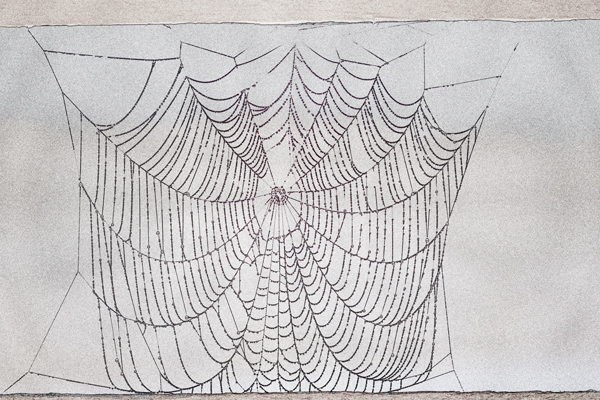
The next morning, after a really fine breakfast, some spiderweb

Spider web

 and foggy tree photos, we headed for the Falls at Hills Creek.  Before we even hit the falls, a pond right across the road had some good fall reflections.  At the Falls, the lower falls has the largest drop at 63 feet, with a very good viewing platform.  So I went right down to the bottom on a boardwalk followed by a metal stairwell and more boardwalk, planning to be able to stop at the others on the way back to catch my breath.

Lower falls

The walk is kind of steep, especially carrying a tripod and backpack, but you just need to take your time and rest when need to and it isn’t too bad.

Cascade at Middle Falls.

I had a chance to rest at Middle Falls to take some more shots.  By this time, the sky seemed to be clearing even more, so waiting for the clouds to hide the sun was getting a little tedious, but I still like this middle falls shot with partial sun on the rocks.

After the Falls we hit the Cranberry Glades Boardwalk, which I think is better in the spring.  I did shoot some dried ferns and a cecropia moth caterpillar, but nothing really exciting.  To end the day we drove up the Highland Scenic Highway.  In some areas, the colors were doing fairly well, but I just couldn’t find a particular tree or color mass that excited me.

On Sunday morning we stopped at a place Raj had seen on Saturday, with a pond reflecting an old weathered barn.  The mist cooperated, and we stayed there a while, before moving on to Watoga State Park.  Some nice fall reflections in the lake, but nothing much else, so we started home.

Rooms and food at the Inn were excellent, but the Inn was almost 20 miles east of Marlinton, and most of the areas I preferred were west of Marlinton, so there was a lot of traveling for Raj and me.  Others went to the Cass Railroad, the radio telescope at Green Bank, and the windmill farm, all to the north.  Bottom line:  good trip!

Tagged | Leave a comment

An-My Le in conversation with BMA curataor Ann Shafer

It’s the subtleties eventually that become essential. — Jon Cone

Just returned from an artist talk at MICA between An-My Le (pronounced ann-mee lay) and BMA associate curator Ann Shafer.  Le uses a 4 x 5 view “camera to investigate multi-layered ideas about war and the military…with quiet nuance.”  She won the MacArthur Foundation “genus grant” in 2012 and numerous other awards.  The exhibition of about 20 images is currently in the “Front Room” at the BMA (Ms. Shafer noted that although there is construction around the museum, it is open).

The images are all non-combat images, so different from what might be expected from war and military images.  As Ms. Shafer pointed out, the vast majority of military personnel and operations are not directly involved in combat.

There were images from numerous venues including Vietnam, war reenactments, military bases and war ships.  Many of the images shown can be found at An-My Le Small Wars, although not all of the images at this site were hers.

I liked her portraits best. They seemed to convey a “sense” of the subjects. They let me feel like I could connect with the subjects if I ever met them.

I found some of the other images to be too “quietly nuanced” for my untrained eye, although several other images were outstanding. One that Ms. Shafer noted was her favorite showed a wooden lounge chair adjacent to a table with machine gun on what appeared to be the back end of boat looking out to sea.  The combination of the mundane furniture and the machine gun in the unlikely setting was quite striking.  An image of a helicopter at the horizon, coming toward the photographer was also eye-catching and noteworthy for having been taken with a view camera.  I definitely plan to visit the BMA for a closer viewing of Ms. Le’s images.

Ann Shafer will be at the Baltimore Camera club on Thursday, Oct. 17 to talk about the exhibition.  She is very knowledgeable about both Ms. Le. and the substance and content of the photographs. I believe that anyone who attends will have an opportunity to get a better understanding of Ms. Le’s work and intent.

Tagged | Leave a comment

BayScaping – Update

Bread feeds the body indeed, but flowers feed also the soul. — The Koran

Back in April I first described my “Bay Scaping” attempt:  planting native plants with positive food and habitat values for wildlife.  Well the bumble bees really like the swamp milkweed, but the milkweed didn’t attract too much else.  The Joe Pye weed  however, is doing a reasonably good job of attracting tiger swallowtails, including one dark form.  I have had as many as four or five at a time.  Also, perhaps as the season advanced, getting some silver spotted skippers.  Hopefully, some eggs will be laid and the intensity will increase next year.

Silver-spotted Skipper butterfly.TigerSwallowtail015

Tagged , , , , | Leave a comment

Trying Out “Meet Your Neighbours” — Again

Nature has explained to me many things that books alone could not give me. Science and nature have given me the most interesting hours of my life.  —Roman Vishniac

I first heard about “Meet Your Neighbours” (the “u” is intentional) during the BioBlitz at Rocky Mountain National Park.  Clay Bolt gave a presentation on this project that is associated with ILCP and lists some pretty impressive photographers as participants. The technique is fairly straightforward.  Basically you use white plexiglas (acrylic) with a flash behind it to create a pure white background for your subject.  Flash in front provides the main light. It creates a very consistent appearance and makes it easy to extract the image.  I used it for my project in Nebraska at Homestead National Monument, but not under the best circumstances, trying it for the first time in the field. So today when my son found a large Imperial Moth on our porch, I thought it was a good opportunity to try it at home where I had more resources.

Welll — I actually had better luck in the field.  I used an old Sunpak 311 with a mini-slave for the back lighting.  It worked reasonably well in Nebraska, but here it just kept shorting out.  Nevertheless, I was not about to let this opportunity with a very cooperative moth escape without at least trying.Imperial moth (Eacles imperialis, female).

Imperial moth (Eacles imperialis, female)

I found that the back lighting wasn’t sufficient and wasn’t even, so I had to do a lot of clean up in post.  Also need to make sure next time that the plexi is clean –  it is a real dust magnet.

I ordered a flash multi-sync cable that I can use to connect an old (not as old as the Sunpak) Nikon SB-25 flash to my SB-800 directly and avoid the issues I had with the slave. Hopefully it will work better next time.  Also played around a little with images.ImperialMothEdgesDiffImperialMothEdges

Tagged | Leave a comment

Completing Artist Residencies

A big part of doing your work is defending your time and your attention so you can do your work. —  Seth Godin

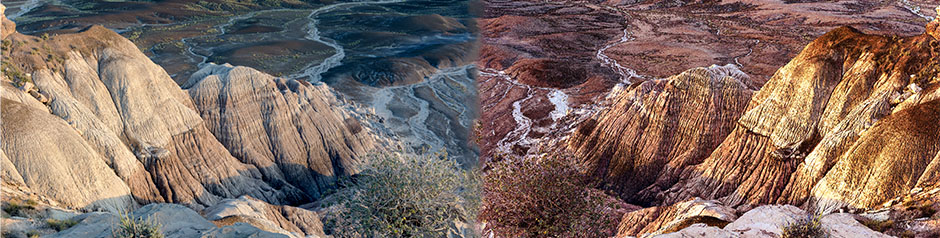
In the last two weeks I have finally given up procrastination to complete the second and third artist residencies I did last year.  The requirements were not very onerous, but I didn’t make it priority — now finally done. BlueMesaOverlook012-300For Petrified Forest, this picture from the Blue Mesa area toward the southern area of the Park was selected by Park staff. Blue Mesa was definitely one of my favorites; the other being the Painted Desert behind the Painted Desert Inn. SunriseMist-(45)Take3CroppedMASTERdsmall

For Big Cypress, which was actually in 2013 and my last residency, both the Park and I readily agreed on a sunrise picture of a palmetto coming out of the ground fog with a really fantastic morning sky.

Tagged , | Leave a comment

Show Season part 2 – NJ

I have missed more than 9,000 shots in my career. I have lost almost 300 games. On 26 occasions I have been entrusted to take the game winning shot, and I missed. I have failed over and over and over again in my life. And that is why I succeed. – Michael Jordan

Unfortunately in attending outdoor ArtFests the weather can make or break your sales. In NJ, the weather was not particularly helpful. On Friday, we drove through calf deep water to get to our hotel. Our setup doesn’t take that long and we were concerned about wind and rain overnight, so we decided to set up early on Saturday. We were very lucky that our assigned location was relatively dry, others not so much. In comparison to Harrisburg, the crowds were light. Two of three comments on ArtFairInsiders indicated that people did not generally do well, although a few did quite well. I am sure the weather was a factor and the crowd seemed small to me, but it seemed that those who bought were largely, although not entirely, looking for beach related scenes for their beach homes. I saw a lot of art work go from a booth where the photographer specialized in beach scenes.

Personal thanks to Lin Warren for stopping by my booth and giving me some great advice in response to my telling her I was relatively new and not making much progress.

So once more I didn’t make my costs, but one more show to go (Bel Air in the fall) before I decide how to proceed.

Tagged | Leave a comment

Show Season

Finished-boothOne way to put yourself (or myself) out there as a photographer is to participate in “ArtFests” that are held in many communities across the country. It is not only a way to directly sell your work, but to distribute your card (advertise) to potentially interested customers and get feedback on your work.

Listings of many of the ArtFests are available at www.zapplication.org which can also process applications. It is usually $25-$40 for a jury fee and if you are selected, anywhere from about $100 to $500 for a 10′ x 10′ booth fee. The lower priced booths tend to be for one-day shows or smaller venues; corner booths or double booths may cost more. In general, the juried fairs have good quality work from many types of artists and craftsmen. The better shows do not allow re-sale of factory made objects and require that the artist be present. Acceptance at the higher end (i.e., more affluent communities or more established artists), from my experience tends to be inconsistent; you may not be accepted one year, but accepted the next with the same work.  Some of this is explainable as different judges, different numbers or types of applications, or categories that are filled.  My approach and recommendation is to try to find shows more focused on art and less on crafts, although some of the wood, pottery and glass crafts are truly exceptional. Where does craft shade into art? In my opinion, if it serves a utilitarian purpose it is craft; if it is strictly decorative or for appreciation, it is art, regardless of the media.  [Revised 9/1/13]

The biggest advantage of these shows, in my opinion, is that unlike a gallery, where someone else decides if your work is “saleable” you get to make the decision as to whether the public should be exposed to your work and let them make the buying decision. You also bear the costs if your images don’t sell and the costs of the learning curve if you think you can do better.

I had done several local shows in 2008-09 and stopped because selling got harder as the recession became more intense; I was also very busy at work. With my retirement and an improving economy, I decided to try again. So far this year, I participated in the Patriot News ArtFest in Harrisburg, PA, about an hour and ten minutes from home and the Gunpowder ArtFest in Hydes, Maryland, about a 25 minute drive for me.

Harrisburg had some excellent artists and photographers and the crowd was very good. Some vendors found that sales were slow (remaining caution post-recession?), but some folks did better on the final day. I didn’t make back my costs and I am in the process of analyzing what I need to do better, including both presentation and pricing. I did save some money by traveling back and forth each day rather than lodging at a hotel. Also I calculated mileage cost at the federal rate. Friday was setup, Saturday – Monday (Memorial Day) were show days so there were four travel days. Two days I used our Prius, but for Friday and Monday I used a Subaru and a rented trailer. The trailer was a little over $100, including insurance. After PA sales tax, gross sales were a about $300 short of direct expenses [jury and booth fees, mileage (at the federal rate), trailer rental]. If I use actual gas costs instead of the federal mileage rate I am short about $160. So although I lost money, I am close enough to profit that continuing is reasonable if I make some changes.

The Gunpowder ArtFest was very different. Set at a winery, it was also a brutally hot day (90+ degrees). I had participated in this fair, which also benefits the Northern Baltimore County Art Foundation twice before. I paid an extra $50 to be in the barn (total $150) although I had not been in the barn or questioned conditions (a big mistake). The show was Saturday from noon to 7:00. Traffic was much lighter than Harrisburg, the Barn was probably a mistake as by 1 PM it was hotter than outside. It was recommended that artists bring their own lighting, but that wasn’t noted on the application. Because people were using lighting and fans, the electrical circuitry wasn’t up to the job and went down briefly at least three times. I didn’t rent a trailer because I could make multiple trips because the venue was closer to home. Total sales a pitiful $5. People around me said they had done better at total rain outs in other locations. So for show 2, a smaller loss only because expenses were so low. However, the effort was high, the day was very uncomfortable because of the heat. Probably won’t repeat this show. More experienced folks have told me that deciding which shows to attend is an important part of the equation, but also that at the same show success can vary significantly from year to year.

I have another show this coming weekend: the Jersey Shore Fine Art Show. I wasn’t initially considering this one, but the area was devastated by Hurricane Sandy, and so they offered booths without a fee in order to help bring back tourism and I felt that it was both a good cause and a good deal to check it out. That will be my last show until the fall. Will report back next week.

Tagged | Leave a comment

Wildflower Pilgrimage – Day 2

Well, it is raining pretty hard, but we will be leaving in about 20 minutes.  Since we will be going on a forest service road (I wasn’t aware of that before we left), the trip leader agreed to take us in his 4-wheel drive – thank you sir.  Next time we take the Subaru and the hell with the gas costs.  The rain has eased up a little in the last 10 minutes, so maybe it will clear.  The weather map showed a heavy storm moving from southwest to northeast; hopefully it will pass by the time we get to our first  location.  Didn’t down load photos, but tonight will include yesterday and today.  Spoke to a gentleman very knowledgeable about the area and he gave me directions to a great bog, not too far from here.  He said there are some orchids in July, so it sounds worth checking out.

Tagged | Leave a comment

West Virginia Wildflower Pilgrimage

Leaving for the Rain Shadow/Shale Barrens trip in about half an hour.  Should be some good wildflowers. Yesterday did Ekalaka Falls and toured the Park with a ranger. Light was poor.

Kate's Mountain Clover

In the Shale Barrens. Four image stacked focus.

Tagged | 4 Comments

Jerry Uelsmann Exhibit

My visual quest is driven by a desire to create a universe capable of supporting feelings and ideas. — Jerry Uelsmann

On Tuesday I made the time to travel to the Michener Art Museum in Doylestown, PA to view The Mind’s Eye:  50 Years of Photography by Jerry Uelsmann. It was worth the 2+ hour trip from Baltimore.

Increasingly I have felt that composite images are one of the best ways for me to express myself, express complex ideas, and distinguish myself from other photographers.  There are so many greatly skilled professional and amateur outdoor photographers these days it is really difficult to distinguish your images from the thousands of perfectly lit, well composed landscape and wildlife images.  Those who can afford it, are tending to do so by going to less well-traveled locations like Patagonia, Antarctica, Greenland and Iceland.  The photographer’s own creativity, imagination, insight and experience provides an alternate approach that is in many ways more personal.

In my opinion, today’s cameras and software are so sophisticated and capable, photography is less and less about exposure and technical issues and more and more about ideas, creativity, and the skills to implement those ideas.  Technical skill regarding composition, use of depth of field, and post-processing are still extremely important as a means of effectively implementing the idea, concept or insight, but for me, although capturing or documenting a great scene is still extremely enjoyable, I am spending more and more time thinking about my photography almost like poetry — a means to capture and express, with only the essential details, a concept, emotion, or insight as an image. Sandpiper at Sunset Rather than “taking” photos, I want increasingly to “make” photos.

This may be obvious to others, but as an outdoor photographer my attention has been more on capturing beautiful scenes than expressing insights or emotions; which is not to say that beautiful scenes cannot be expressive or more than just documentation of content and lighting.  Uelsmann noted “It is disturbing to discover the number of leading figures in photography today who believe the decisive  moment or slice-of-life form of photography to be the ONLY [emphasis added] natural form, and all other approaches being somehow affectations. Let the inner needs of the photographer combine with the specifics of any given photographic effect to determine for that moment the most applicable approach… Furthermore, let him feel free, at anytime during the photographic process, to post-visualize.”

Tagged | Leave a comment

BayScaping

“BayScaping” is the local (Maryland) term for natural landscaping that uses native plants and specifically provides habitat and food for wildlife. There are numerous advantages generally including lower maintenance and high success, since the native plants are better adapted to the local environment.

I have just completed digging out 400 square feet of old forsythia to make room for plants that will attract wildlife including:  columbine, milkweed, butterflyweed, Joe Pye weed, coneflower and goldenrod.

This project addresses both my conservation concerns and, hopefully in the future, will provide numerous photographic opportunities for macro subjects and small wildlife, as well as the potential for teaching small classes on closeup and macro photography from home.  I did not think ahead to photograph the starting point with really over grown forsythia, but will try to document my progress, successes and failures moving forward.

As we develop more and more land, plant more lawns and lay down more asphalt for roads, it is increasingly necessary for those who care to at least make an effort to provide pockets of natural habitat in support of wildlife.

Tagged , , , , | Leave a comment